Mechanical Engineering
Grading System
Examinations are graded on letter grading system as stated in the university senate legislation July 2017, Article 92. However, the grading system for internship course shall be described as excellent, very good, good etc., the status description is based on the raw mark interval given in Table 1.
Raw Mark interval (100%) | Corresponding Letter Grade | Corresponding fixed number Grade | Status Description | Class Description |
[90,100] | A+ | 4.0 | Excellent | First Class with Great Distinction |
[85,90) | A | 4.0 | ||
[80,85) | A- | 3.75 | ||
[75,80) | B+ | 3.5 | Very Good | First Class with Distinction |
[70,75) | B | 3.0 | ||
[65,70) | B- | 2.75 | Good | First Class |
[60,65) | C+ | 2.5 | Second Class | |
[50,60) | C | 2.0 | Satisfactory | |
[45,50) | C- | 1.75 | Unsatisfactory | Lower Class |
[40,45) | D | 1.0 | Very Poor | |
[0,40) | F | 0 | Fail | Lowest Class |
To pass the course a student must achieve a minimum of 40% in the final exam. | ||||
Graduation Requirements
Graduation requirement for all undergraduate programs should satisfy the following minimum requirements as stated in the university’s senate legislation July 2017, Article 109. The total number of credit hours required for graduation with the Degree of Bachelor of Science in Chemical Engineering is 190 Cr hr including 6 Cr. hr internship.
All the required courses/modules and the minimum credit hours set in the program curriculum by the respective academic unit should be satisfied, except for phase in and phase out program.
A minimum cumulative grade point average CGPA of 2.00 must be obtained;
A minimum cumulative grade point average CGPA of 2.00 in major area courses;
No ”F” grade in any course taken for undergraduate program;
Score pass mark for all courses which have Pass/Fail grade.
The total number of credit hours required for graduation with the Degree of Bachelor of Science in Mechanical Engineering is 186 Cr hr including 6 Cr. hr internship.
To maintain the quality of the program, it is important to keep the admission requirements up to the standard. This is achieved by strictly following the guideline for admission to the Mechanical Engineering Department which is in line with the general university requirement and Senate Legislation.
Degree Nomenclature
The name of the degree program should be written in both English and Amharic, with the focus area, if any, indicated in brackets.
Degree Nomenclature for Bachelor Degree Mechanical Engineering Programs are listed as follows:
“Bachelor of Science Degree in Mechanical Engineering”
“የሳይንስ ባችለር ዲግሪ በመካኒካል ምህንድስና”
“Bachelor of Science Degree in Mechanical Engineering (Automotive Stream)”
‘’የሳይንስ ባችለር ዲግሪ በመካኒካል ምህንድስና (አውቶሞቲቭ ስትሪም)’’
“Bachelor of Science Degree in Mechanical Engineering (Manufacturing Stream)”
‘’የሳይንስ ባችለር ዲግሪ በመካኒካል ምህንድስና (ማኑፋክቸሪንግ ስትሪም)”
“Bachelor of Science Degree in Mechanical Engineering (Mechanical Design Stream)”
‘’የሳይንስ ባችለር ዲግሪ በመካኒካል ምህንድስና (መካኒካል ዲዛይን ስትሪም)’’
“Bachelor of Science Degree in Mechanical Engineering (Thermal Stream)”
“የሳይንስ ባችለር ዲግሪ በመካኒካል ምህንድስና (ተርማል ስትሪም)’’
Course Coding
Each course code contains a prefix; each prefix contains four letters without any space followed by four digits.
For example, in the code “MEng1001”;
The first digit (1) represents the year (level) in which the course is given,
The second digit (0) indicates the category number to which the course belongs,
The last two digits (01) indicate the semester in which the course is given.
All courses given in the first semester are represented by odd number (01, 03, 05, 07 …etc.)
All courses given in the second semester are represented by even number (02, 04, 06, 08…etc.)
Course Breakdown for Regular Programs
This section includes the list of course sequence in each semester indicating the credit hour (Cr.hr), course lecture, and tutorial/Lab hours. The course breakdown for undergraduate regular programs in all semesters shall be presented according to table 10. The course breakdown for the undergraduate continuing education programs in all semesters shall be presented in Annex 3.3 using similar table format.
Table 2: Semester Course Breakdown for Regular Program
Year I, Semester I
Course Code | Course Title | Cr.hr. | Lect. | Tut. | Lab. |
Phil 1012 | Logic and Critical Thinking | 3 | 3 | 0 | 0 |
Psyc 1011 | General Psychology | 3 | 3 | 0 | 0 |
FLEn 1011 | Communicative English Language Skill – I | 3 | 3 | 0 | 0 |
GeES 1005 | Geography of Ethiopia and The Horn | 3 | 3 | 0 | 0 |
Math 1007 | Mathematics ( For Natural Science) | 3 | 3 | 0 | 0 |
Phys1001 | General Physics | 3 | 3 | 0 | 0 |
SpSc 1013 | Physical Fitness | 0 | 0 | 0 | 2 |
Total | 18 | 18 | 0 | 2 | |
Year I, Semester II
Course Code | Course Title | Cr.hr. | Lect. | Tut. | Lab. |
EmTe 1112 | Introduction to Emerging Technology | 3 | 3 | 0 | 0 |
Entr.1106 | Entrepreneurship | 2 | 2 | 0 | 0 |
Anth1011 | Social Anthropology | 2 | 2 | 0 | 0 |
FLEn 1012 | Communicative English Language Skill-II | 3 | 3 | 0 | 0 |
Math1102 | Applied Mathematics I | 4 | 3 | 3 | 0 |
MCiE1012 | Moral and Civic Education | 2 | 2 | 0 | 0 |
INCL1010 | Inclusiveness | 2 | 2 | 0 | 0 |
Tota | 18 | 17 | 3 | 0
| |
Year II, Semester I
Course Code | Course Title | Cr.hr. | Lect. | Tut. | Lab. |
MEng2101 | Engineering Drawing | 3 | 1 | 1 | 5 |
Comp2103 | Introduction to computer programing | 3 | 2 | 0 | 3 |
CEng2105 | Engineering Mechanics I | 3 | 2 | 3 | 0 |
Math2101 | Applied Mathematics II | 4 | 3 | 3 | 0 |
Econ2009 | Economics | 3 | 3 | 0 | 0 |
GLTr2011 | Global Trend | 2 | 2 | 0 | 0 |
Total | 18 | 13 | 7 | 8 | |
Year II, Semester II
Course Code | Course Title | Cr.hr. | Lect. | Tut. | Lab. |
MEng2102 | Engineering Mechanics II | 3 | 2 | 3 | 0 |
MEng2104 | Strength of Materials I | 3 | 2 | 3 | 0 |
Math2142 | Applied Mathematics III | 4 | 3 | 3 | 0 |
MEng2106 | Engineering Thermodynamics I | 3 | 2 | 3 | 0 |
MEng2108 | Basic Workshop Practice | 2 | 1 | 0 | 3 |
MEng2110 | Machine Drawing with CAD | 4 | 1 | 3 | 6 |
Total | 19 | 11 | 15 | 9 | |
Year III, Semester I
Course Code | Course Title | Cr.hr. | Lect. | Tut. | Lab. |
MEng3101 | Engineering Thermodynamics II | 3 | 2 | 3 | 0 |
MEng3103 | Strength of Materials II | 3 | 2 | 3 | 0 |
ECEg3101 | Basic Electricity and Electronics | 3 | 2 | 0 | 3 |
MEng3105 | Engineering Materials | 4 | 3 | 0 | 3 |
MEng3107 | Fluid Mechanics I | 3 | 2 | 3 | 0 |
Hist2002 | History of Ethiopia and the Horn | 3 | 3 | 0 | 0 |
Total | 19 | 14 | 9 | 6 | |
Year III, Semester II
Course Code | Course Title | Cr.hr. | Lect. | Tut. | Lab. |
MEng3102 | IC Engines | 3 | 2 | 0 | 3 |
MEng3104 | Introduction to Numerical methods and FEM | 3 | 2 | 2 | 1 |
MEng3106 | Machine Elements I | 3 | 2 | 3 | 0 |
MEng3108 | Manufacturing Processes | 3 | 2 | 3 | 0 |
MCEg3110 | Introduction to Mechatronics | 3 | 2 | 3 | 0 |
MEng3112 | Fluid Mechanics II | 3 | 2 | 2 | 1 |
Total | 18 | 12 | 13 | 5 | |
Year IV, Semester I
Course Code | Course Title | Cr.hr. | Lect. | Tut. | Lab. |
MEng4101 | Machine Elements II | 3 | 2 | 3 | 0 |
MEng4103 | Heat Transfer | 3 | 2 | 3 | 0 |
MEng4105 | Fluid Power Systems | 3 | 2 | 1 | 2 |
ECEg4107 | Electrical Power and Machines | 3 | 2 | 0 | 3 |
MEng4109 | Mechanisms of Machinery | 3 | 2 | 3 | 0 |
IETP4115 | Integrated Engineering Team Project | 3 | 1 | 0 | 6 |
Total | 18 | 12 | 10 | 8 | |
Mechanical Core Stream
Year IV, Semester II (Mechanical Core Stream)
Course Code | Course Title | Cr.hr. | Lect. | Tut. | Lab. |
MEng4102 | Material Handling Equipment | 3 | 2 | 3 | 0 |
MEng4404 | Computer Integrated Manufacturing | 3 | 2 | 1 | 2 |
MEng4106 | Motor Vehicles Engineering | 3 | 2 | 1 | 2 |
MEng4606 | Turbomachinery I | 3 | 2 | 2 | 1 |
MEng4110 | Refrigeration and Air Conditioning | 4 | 2 | 3 | 3 |
MEng4112 | Machine Design Project | 3 | 0 | 0 | 9 |
Total | 19 | 10 | 11 | 16 | |
Year IV, Summer Semester (Term III)
Course Code | Course Title | Cr.hr. | Lect. | Tut. | Lab. |
MEng4114 | Industrial Internship | 6 | 0 | 0 | 18 |
Total | 6 | 0 | 0 | 18 | |
Year V, Semester I (Mechanical Core Stream)
Course Code | Course Title | Cr.hr. | Lect. | Tut. | Lab. |
MEng5101 | Power Plant Engineering | 3 | 2 | 3 | 0 |
MEng5103 | Mechanical Vibration | 3 | 2 | 3 | 0 |
MEng5105 | Maintenance of Machinery | 3 | 2 | 3 | 0 |
MEng5607 | Turbomachinery II | 2 | 1 | 3 | 0 |
MEng5309 | Heavy Duty and Construction Equipment | 2 | 2 | 0 | 0 |
MEng5111 | Integrated Design Project | 3 | 0 | 0 | 9 |
MEng5113 | Final Year Project Phase I | — | 0 | 3 | 0 |
Stat5115 | Probability and Statistics for Engineers | 3 | 2 | 3 | 0 |
Total | 19 | 11 | 18 | 10 | |
Year V, Semester II (Mechanical Core Stream)
Course Code | Course Title | Cr.hr. | Lect. | Tut. | Lab. |
MEng5102 | Industrial Management and Engineering Economy | 3 | 3 | 0 | 0 |
MEng5104 | Measurement and Instrumentation | 3 | 2 | 3 | 0 |
MEng5106 | Control Systems Engineering | 3 | 2 | 3 | 0 |
MEng5108 | Final Year Project Phase II | 6 | 0 | 0 | 18 |
Total | 15 | 07 | 06 | 18 | |
Automotive Stream
Year IV, Semester II (Automotive Stream)
Course Code | Course Title | Cr.hr. | Lect. | Tut. | Lab. |
MEng4102 | Material Handling Equipment | 3 | 2 | 3 | 0 |
MEng4106 | Motor Vehicles Engineering | 3 | 2 | 1 | 2 |
MEng4108 | Turbomachinery | 3 | 2 | 3 | 1 |
MEng4110 | Refrigeration and Air Conditioning | 3 | 2 | 3 | 1 |
MEng4310 | Automotive Electrical Systems | 3 | 2 | 0 | 3 |
MEng4112 | Machine Design Project | 3 | 0 | 0 | 9 |
Total | 18 | 10 | 10 | 16 | |
Year IV, Summer Semester (Term III)
Course Code | Course Title | Cr.hr. | Lect. | Tut. | Lab. |
MEng4114 | Industrial Internship | 6 | 0 | 0 | 18 |
Total | 6 | 0 | 0 | 18 | |
Year V, Semester I (Automotive Stream)
Course Code | Course Title | Cr.hr. | Lect. | Tut. | Lab. |
Stat 5115 | Probability and Statistics for Engineers | 3 | 2 | 3 | 0 |
MEng5103 | Mechanical Vibration | 3 | 2 | 3 | 0 |
MEng5305 | Automotive Electronics Systems | 3 | 2 | 0 | 3 |
MEng5307 | Fleet and Transport Management | 2 | 2 | 0 | 0 |
MEng5309 | Heavy Duty and Construction Equipment | 2 | 2 | 0 | 0 |
MEng5311 | IC Engines and Motor Vehicles Lab | 1 | 0 | 0 | 3 |
MEng5111 | Integrated Design Project | 3 | 0 | 0 | 9 |
MEng5113 | Final Year Project Phase I | — | 0 | 3 | 0 |
Total | 17 | 10 | 06 | 15 | |
Year V, Semester II (Automotive Stream)
Course Code | Course Title | Cr.hr. | Lect. | Tut. | Lab. |
MEng5102 | Industrial Management and Engineering Economy | 3 | 3 | 0 | 0 |
MEng5104 | Measurement and Instrumentation | 3 | 2 | 3 | 0 |
MEng5106 | Control Systems Engineering | 3 | 2 | 3 | 0 |
MEng5308 | Automotive Maintenance | 3 | 2 | 0 | 3 |
MEng5108 | Final Year Project Phase II | 6 | 0 | 0 | 18 |
Total | 18 | 09 | 06 | 21 | |
Manufacturing Stream
Year IV, Semester II (Manufacturing Stream)
Course Code | Course Title | Cr.hr. | Lect. | Tut. | Lab. |
MEng4102 | Material Handling Equipment | 3 | 2 | 3 | 0 |
MEng4404 | Computer Integrated Manufacturing | 3 | 2 | 1 | 2 |
MEng4406 | Metal Casting Technology | 3 | 2 | 0 | 3 |
MEng4402 | Machining Technology | 3 | 2 | 0 | 3 |
Stat5115 | Probability and Statistics for Engineers | 3 | 2 | 3 | 0 |
MEng4112 | Machine Design Project | 3 | 0 | 0 | 9 |
Total | 18 | 10 | 07 | 17 | |
Year IV, Summer Semester (Term III)
Course Code | Course Title | Cr.hr. | Lect. | Tut. | Lab. |
MEng4114 | Industrial Internship | 6 | 0 | 0 | 18 |
Total | 6 | 0 | 0 | 18 | |
Year V, Semester I (Manufacturing Engineering Stream)
Course Code | Course Title | Cr.hr. | Lect. | Tut. | Lab. |
MEng5411 | Engineering Measurement and Metrology | 2 | 1 | 0 | 3 |
MEng5403 | Welding Technology | 3 | 2 | 0 | 3 |
MEng5105 | Maintenance of Machinery | 3 | 2 | 3 | 0 |
MEng5103 | Mechanical Vibration | 3 | 2 | 3 | 0 |
MEng5405 | Tool and Die Design and Manufacturing | 3 | 2 | 2 | 1 |
MEng5111 | Integrated Design Project | 3 | 0 | 0 | 9 |
MEng5113 | Final Year Project Phase I | — | 0 | 3 | 0 |
Total | 17 | 09 | 08 | 16 | |
Year V, Semester II (Manufacturing Engineering Stream)
Course Code | Course Title | Cr.hr. | Lect. | Tut. | Lab. |
MEng5102 | Industrial Management and Engineering Economy | 3 | 3 | 0 | 0 |
MEng5404 | Modern Manufacturing Technology | 3 | 2 | 3 | 0 |
MEng5106 | Control Systems Engineering | 3 | 2 | 3 | 0 |
MEng5408 | Metal Forming Technology | 3 | 2 | 3 | 0 |
MEng5108 | Final Year Project Phase II | 6 | 0 | 0 | 18 |
Total | 18 | 09 | 8 | 19 | |
Mechanical Design Stream
Year IV, Semester II (Mechanical Design Stream)
Course Code | Course Title | Cr.hr. | Lect. | Tut. | Lab. |
MEng4102 | Material Handling Equipment | 3 | 2 | 3 | 0 |
Stat5115 | Probability and Statistics for Engineer | 3 | 2 | 3 | 0 |
MEng4106 | Motor Vehicles Engineering | 3 | 2 | 1 | 2 |
MEng4108 | Turbomachinery | 3 | 2 | 3 | 1 |
IEng4110 | Total Quality Management | 3 | 2 | 3 | 0 |
MEng4112 | Machine Design Project | 3 | 0 | 0 | 9 |
Total | 18 | 10 | 09 | 14 | |
Year IV, Summer Semester (Term III)
Course Code | Course Title | Cr.hr. | Lect. | Tut. | Lab. |
MEng4114 | Industrial Internship | 6 | 0 | 0 | 18 |
Total | 6 | 0 | 0 | 18 | |
Year V, Semester I (Mechanical Design Stream)
Course Code | Course Title | Cr.hr. | Lect. | Tut. | Lab. |
MEng5501 | Product Design and Development | 3 | 2 | 3 | 0 |
MEng5411 | Engineering Measurement and Metrology | 2 | 1 | 0 | 3 |
MEng5103 | Mechanical Vibration | 3 | 2 | 3 | 0 |
MEng5105 | Maintenance of Machinery | 3 | 2 | 0 | 3 |
MEng5503 | Introduction to Tribology | 3 | 2 | 3 | 0 |
MEng5505 | Rotor Dynamics | 3 | 2 | 3 | 0 |
MEng5111 | Integrated Design Project | 3 | 0 | 0 | 9 |
MEng5113 | Final Year Project Phase I | — | 0 | 3 | 0 |
Total | 20 | 11 | 12 | 15 | |
Year V, Semester II (Mechanical Design Stream)
Course Code | Course Title | Cr.hr. | Lect. | Tut. | Lab. |
MEng5102 | Industrial Management and Engineering Economy | 3 | 3 | 0 | 0 |
MEng5504 | Introduction to Robotics and Automation | 3 | 2 | 3 | 0 |
MEng5106 | Control Systems Engineering | 3 | 2 | 3 | 0 |
MEng5108 | Final Year Project Phase II | 6 | 0 | 0 | 9 |
Total | 15 | 10 | 12 | 09 | |
Thermal Stream
Year IV, Semester II (Thermal Stream)
Course Code | Course Title | Cr.hr. | Lect. | Tut. | Lab. |
MEng4102 | Material Handling Equipment | 3 | 2 | 3 | 0 |
MEng4106 | Motor Vehicles Engineering | 3 | 2 | 1 | 2 |
MEng4110 | Refrigeration and Air Conditioning | 3 | 2 | 3 | 1 |
MEng4606 | Turbomachinery I | 3 | 2 | 2 | 1 |
MEng4602 | Renewable Energy Systems | 3 | 2 | 3 | 0 |
Stat5115 | Probability and Statistics for Engineer | 3 | 2 | 3 | 0 |
Total | 18 | 12 | 15 | 4 | |
Year IV, Summer Semester (Term III)
Course Code | Course Title | Cr.hr. | Lect. | Tut. | Lab. |
MEng4114 | Industrial Internship | 6 | 0 | 0 | 18 |
Total | 6 | 0 | 0 | 18 | |
Year V, Semester I (Thermal Stream)
Course Code | Course Title | Cr.hr. | Lect. | Tut. | Lab. |
MEng5101 | Power Plant Engineering | 3 | 2 | 3 | 0 |
MEng5603 | Thermo-Fluid System Design | 3 | 2 | 0 | 3 |
MEng5607 | Turbomachinery II | 2 | 1 | 3 | 0 |
MEng5601 | Energy Auditing and Management | 3 | 2 | 3 | 0 |
MEng5111 | Integrated Design Project | 3 | 0 | 0 | 9 |
MEng5103 | Mechanical Vibration | 3 | 2 | 3 | 0 |
MEng5105 | Maintenance of Machinery | 3 | 2 | 3 | 0 |
MEng5113 | Final Year Project Phase I | – | 0 | 3 | 0 |
Total | 20 | 11 | 15 | 12 | |
Year V, Semester II (Thermal Stream)
Course Code | Course Title | Cr.hr. | Lect. | Tut. | Lab. |
MEng5102 | Industrial Management and Engineering Economy | 3 | 3 | 0 | 0 |
MEng5104 | Control Systems Engineering | 3 | 2 | 3 | 0 |
MEng5606 | Gas Turbines and Jet Propulsion | 3 | 2 | 2 | 1 |
MEng5108 | Final Year Project Phase II | 6 | 0 | 0 | 18 |
Total | 15 | 07 | 05 | 19 | |
*Conversion rate: from Cr.hr to ECTS is given as, 1ECTS=1.67Cr.hr.
Program Education Objective (PEO)
The program educational objectives of Mechanical Engineering describes accomplishments that graduates of the program are expected to attain within 3-5 years after graduation. Graduates are expected to be able to attain the following professional objectives:
Table 1: Program Education Objectives (PEO)
PEO | Description |
PEO-1 | Think critically, creatively and rigorously and employ mechanical engineering principles, methods and tools to identify and solve important problems in industry, business, government and academia. |
PEO-2 | Communicate effectively and function cooperatively, including in interdisciplinary professional contexts. |
PEO-3 | Approach professional practice responsibly and ethically and with an awareness of business, environmental, safety, risk management, cultural, societal and global concerns. |
PEO-4 | Demonstrate professional leadership. |
PEO-5 | Employ their engineering education as a foundation for advanced study, lifelong learning and career development in engineering, management and other professional fields. |
Student Outcomes (SO)
Upon completion of the undergraduate degree program of Mechanical Engineering, it is expected that students will have the following skills:
SO | |
SO-1 | An ability to identify, formulate, and solve complex Mechanical engineering problems by applying principles of engineering, science, and mathematics. |
SO-2 | An ability to apply Mechanical engineering design to produce solutions that meet specified needs with consideration of public health, safety, and welfare, as well as global, cultural, social, environmental, and economic factors. |
SO-3 | An ability to communicate effectively with a range of audiences. |
SO-4 | An ability to recognize ethical and professional responsibilities in engineering situations and make informed judgments, which must consider the impact of engineering solutions in global, economic, environmental, and societal contexts. |
SO-5 | An ability to function effectively on a team whose members together provide leadership, create a collaborative and inclusive environment, establish goals, plan tasks, and meet objectives. |
SO-6 | An ability to develop and conduct appropriate experimentation, analyze and interpret data, and use engineering judgment to draw conclusions. |
SO-7 | An ability to acquire and apply new knowledge as needed, using appropriate learning strategies. |
Table 2: Mapping of SO with PEO
PEO-1 | PEO-2 | PEO-3 | PEO-4 | PEO-5 | |
SO-1 | √ | √ | |||
SO-2 | √ | √ | |||
SO-3 | √ | √ | |||
SO-4 | √ | √ | |||
SO-5 | √ | √ | √ | ||
SO-6 | √ | √ | |||
SO-7 | √ | √ |
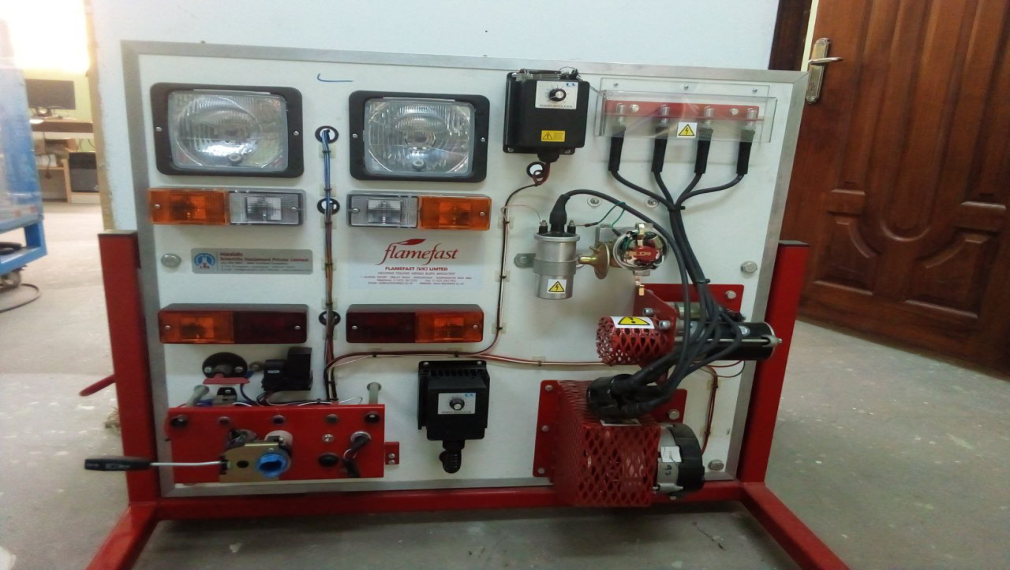
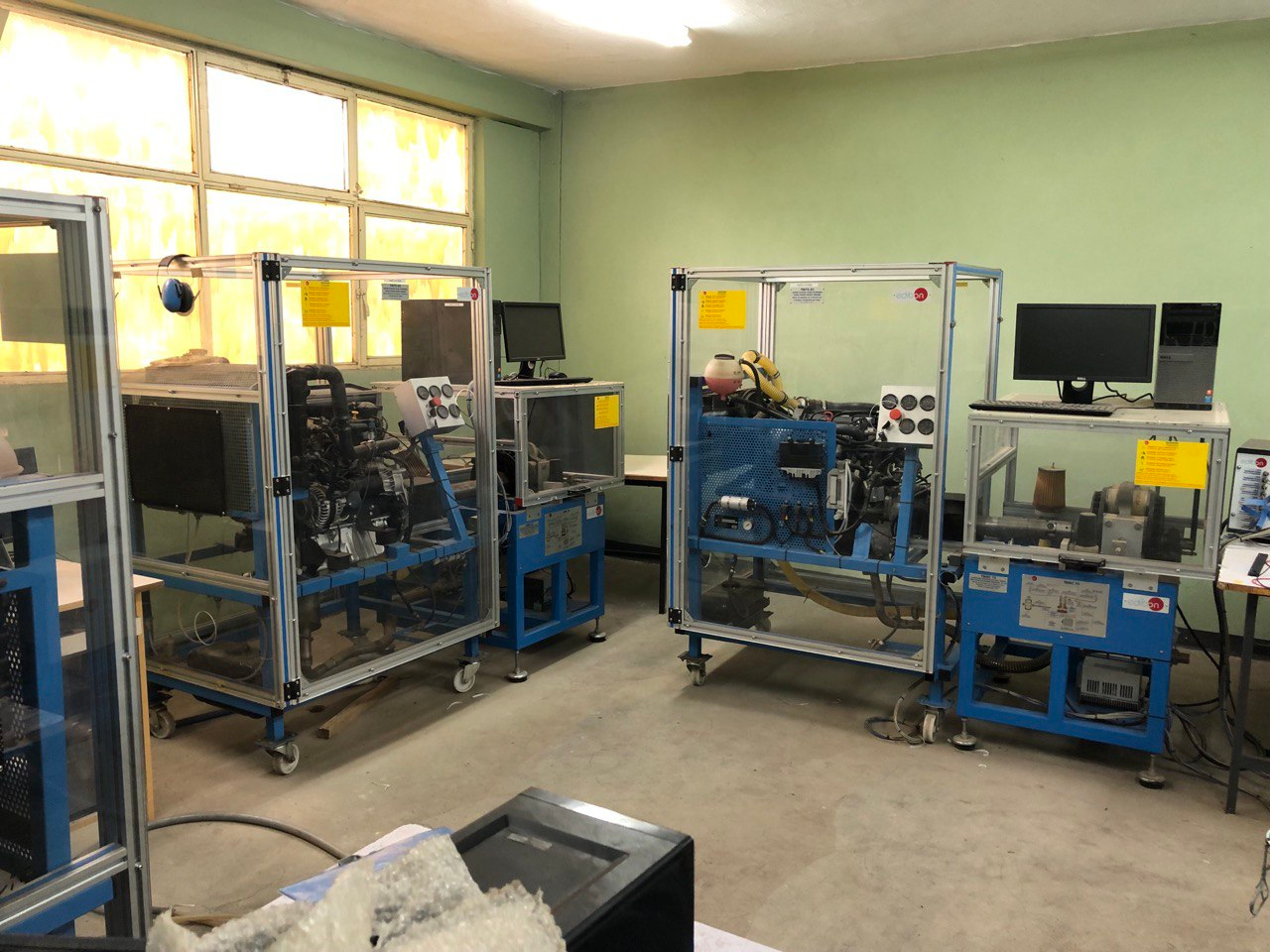
AUTOMOTIVE ENGINEERING LABORATORY
Activities Performed:
Engine performance testing
Emission testing
Smoke testing
Onboard diagnostic system on electronic engines, antilock braking system and central door locking system
Vehicle electrical system demonstration and testing
Ignition system
Lighting system
Starting system
Charging system
Battery testing
Engine section model
Gear box (Transaxle)
Full Vehicle sectioned model
Electro pneumatic steering system
Turbo charger model
Brake system model
Automatic wheel/tyre changer machine
Computerized wheel balancing machine
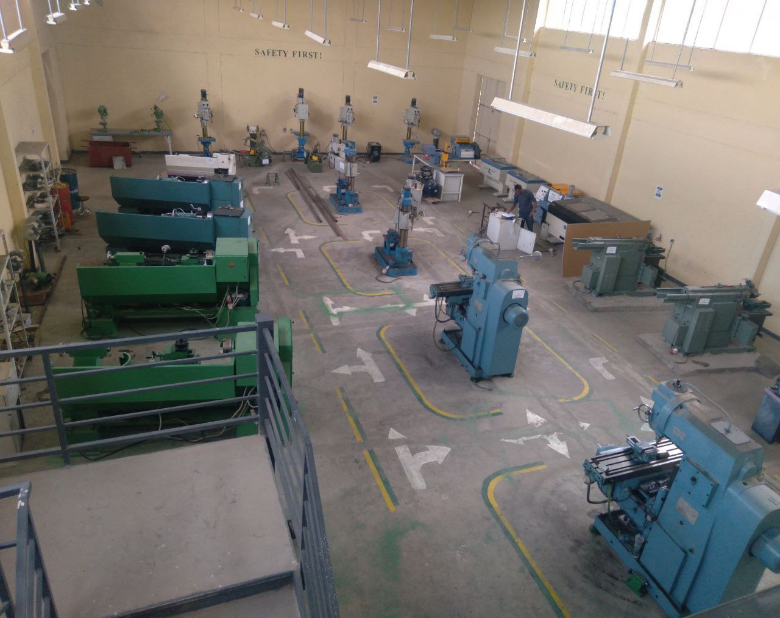
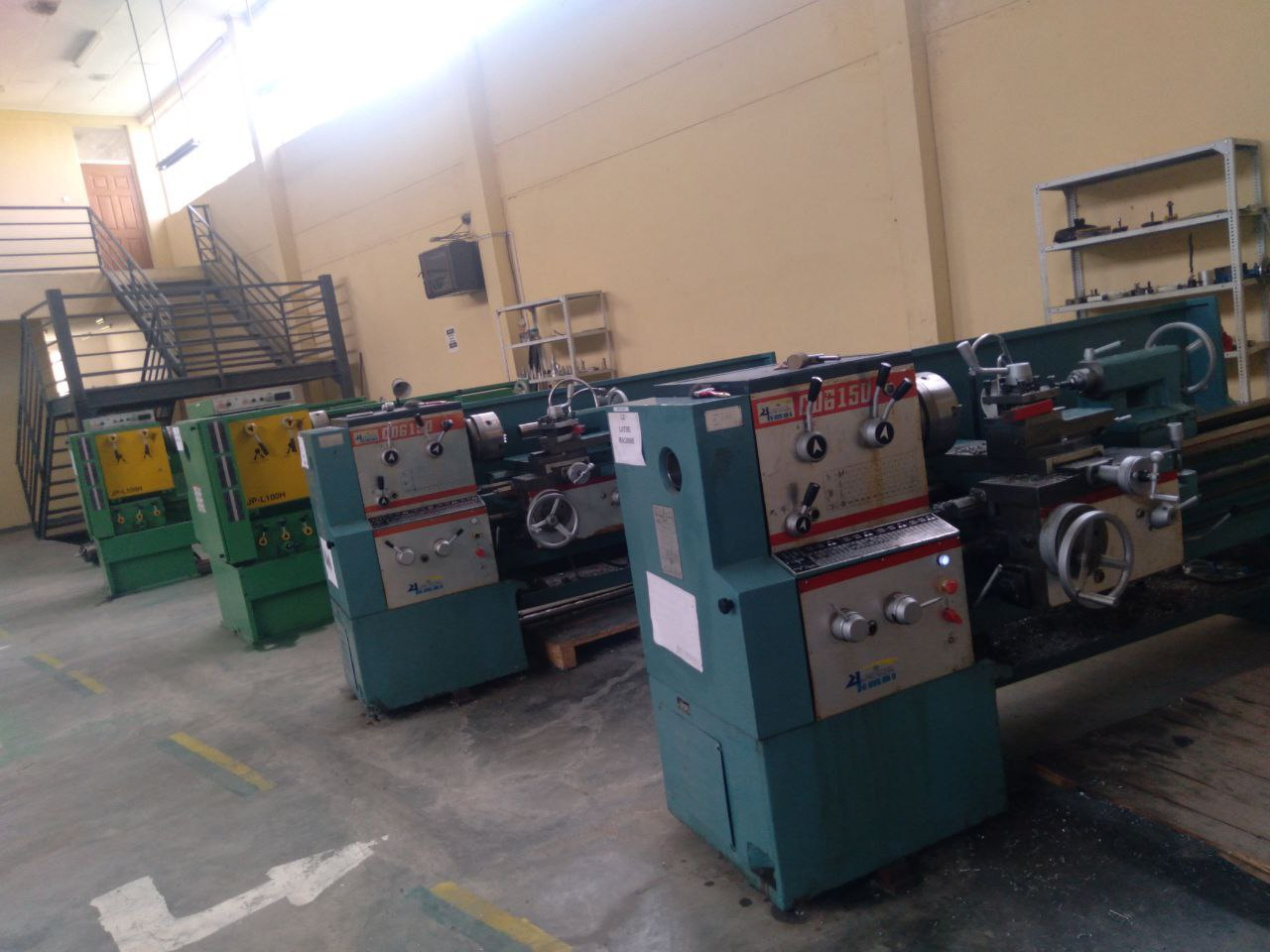
MANUFACTURING ENGINEERING LABORATORY
Activities Performed:
Performing and training on machining process
Performing and training advanced and normal welding process
TIG welding
MIG welding
GMAW
Gas welding
Pattern development and sheet metal work
Product processing using Laser cutter machine
Material testing
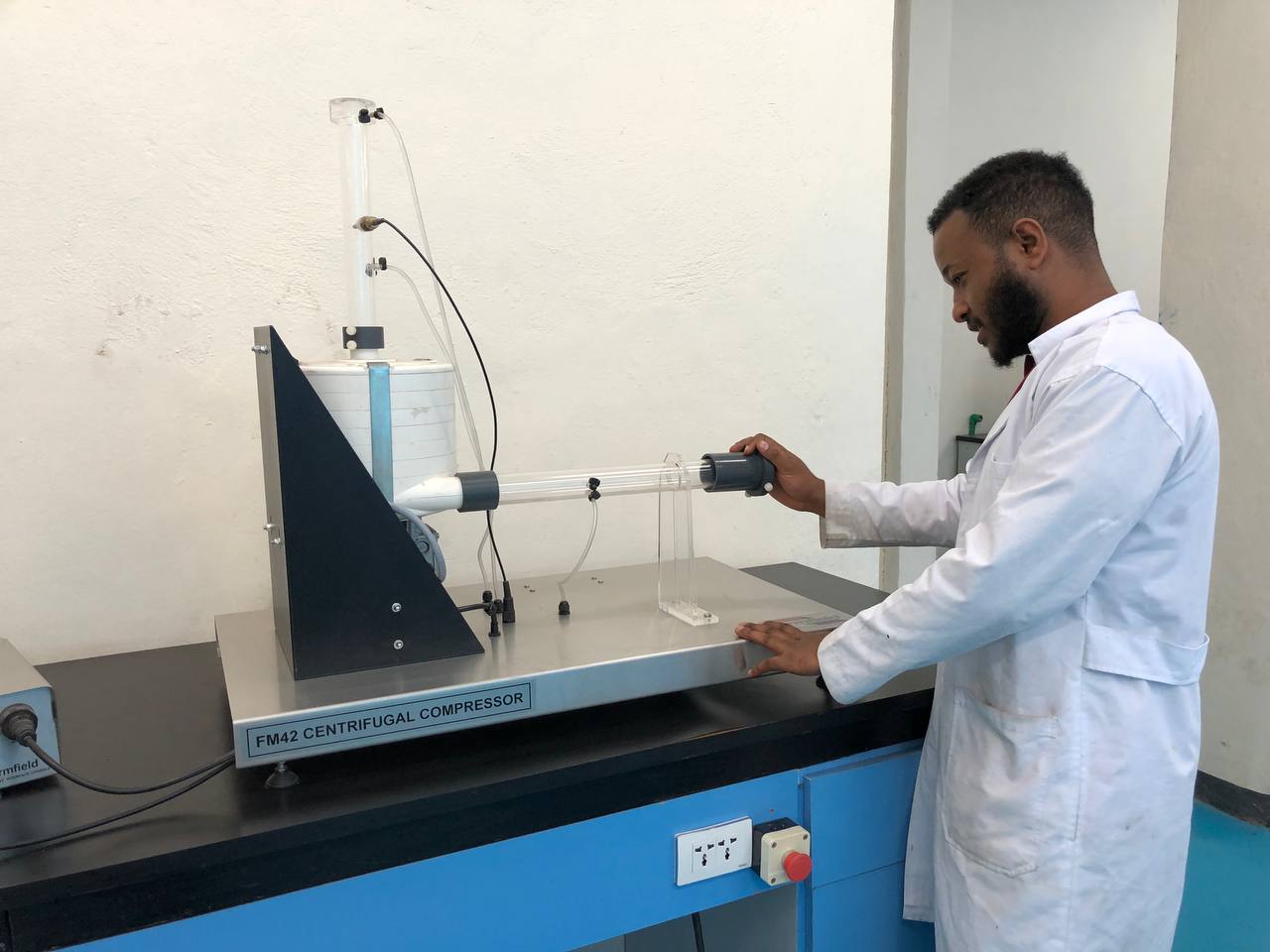
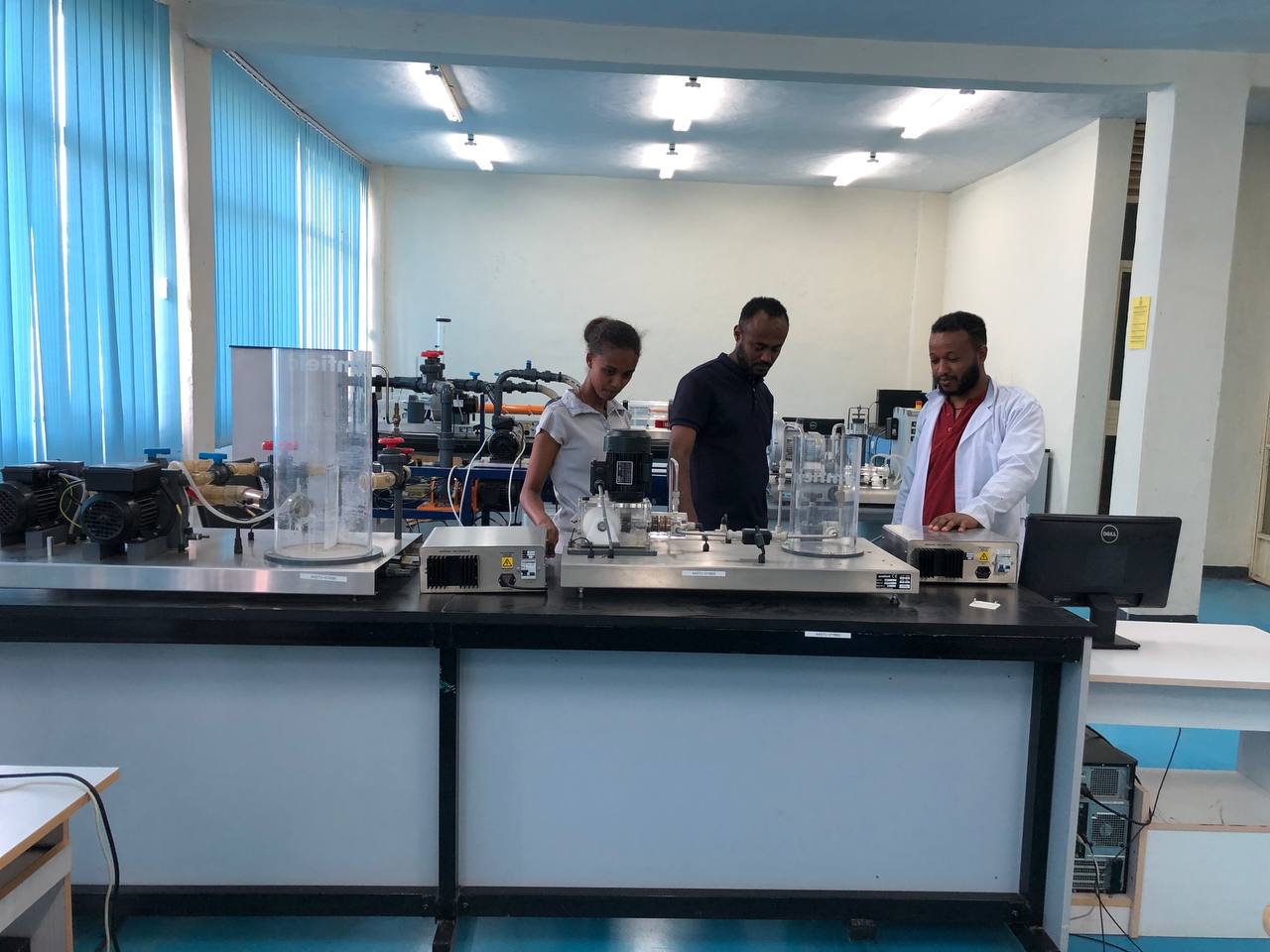
THERMO-FLUID LABORATORY
Activities Performed:
Validation of SFEE involving heat, mass and work transfers
Determination of COP of a Vapor compression refrigerator and estimation of refrigerant heat transfer rates in the evaporator and condensers.
Flow through a bend Duct (Characterization of energy losses in a bend)
Measurement of dispersion around turbulent jet
Measurement of velocity profile and boundary layer growth over a flat plate-effect of smooth/rough surface and favorable/adverse pressure gradient
Measurement of drag and lift of an aero foil at different angles of attack
Verification of Bernoulli‟s equation
Testing of pressure distribution over a cylindrical tube under cross flow
Comparison of losses in nozzle and diffuser type duct flows
Reynolds‟s experiment
Evaluation of heat exchanger performance under parallel and counter flow
Investigation of pressure drop characteristic of a finned tube heat exchanger
Demonstration of Flow visualization patterns over a cylinder and aerofoil