Welcome to Chemical Engineering

Chemical Engineering Department - AASTU

Facts and Figures about Chemical Engineering Department

Addis Ababa Science and Technology University (AASTU)

About Chemical Engineering

Addis Ababa Science and Technology University (AASTU) offer a comprehensive Bachelor of Science (B.Sc.) program in Chemical Engineering through its Department of Chemical Engineering, part of the College of Engineering. Chemical engineering is the branch of engineering that deals with physical and life sciences with mathematics and economics, to the process of converting raw materials or chemicals into more useful or valuable forms. Chemical Engineering is a profession that principally hub on the conversion of raw materials into variety of products, and deals with the design, construction and operation of plants and equipment to achieve an optimum quality and efficiency. In addition to producing useful materials, Chemical Engineering is also concerned with investigating valuable materials and techniques which contribute to dynamic Research & Development world. The chemical engineering profession is the youngest science-based engineering profession. In Ethiopia, it has age not more than 30 years and the program were offered only in two universities Bahir Dar University and Addis Ababa University. Currently, due to larger demand of chemical engineering graduates and the plan of the government of the federal republic of Ethiopia to establish industry-based economy, more than 18 universities have already launched the program. Hence, Addis Ababa Science and Technology University (AASTU) has been launched chemical Engineering program in 2002 EC by considering the need of chemical engineering profession in various industries and for Government plans. Recently, Chemical Engineering Department in AASTU has enrolled 233 students from second year to five year batch with nearly 60 staff members.

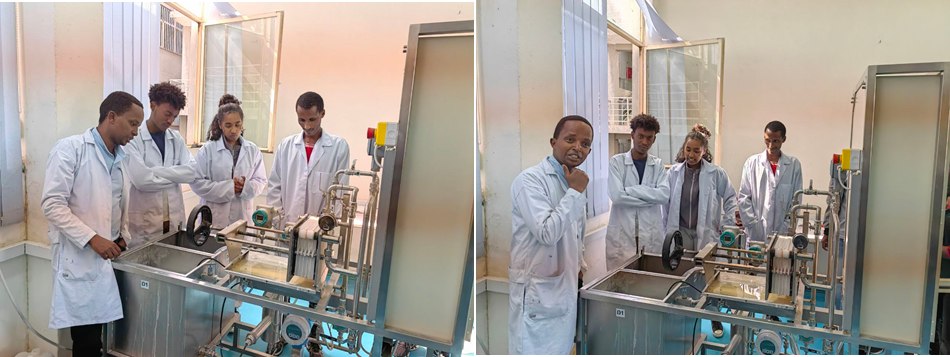
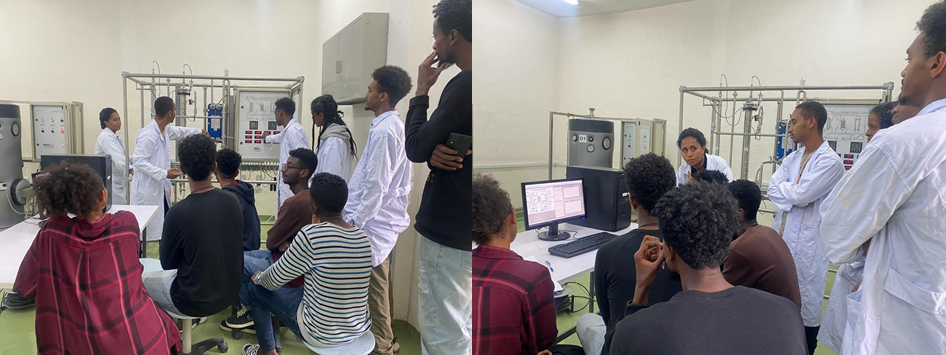
Lab Image

Program Overview

    Duration: 5 years for regular students; 6 years for continuing education

    Credit Hours: 190 total, including 6 credits for an internship

    Degree Awarded: Bachelor of Science in Chemical Engineering

    Curriculum: The program integrates core courses in chemistry, physics, mathematics, and engineering principles, with specialized subjects such as:

    • Chemical Engineering Thermodynamics
    • Fluid Mechanics and Transport Phenomena
    • Mechanical and Thermal Unit Operations
    • Reaction Engineering and Biochemical Engineering
    • Process Dynamics and Control
    • Plant Design and Economics
    • Sustainable Resources and Energy Technologies

Vision, Mission & Core Values

Vision: To be a world leader in developing sustainable, innovative, and efficient solutions that improve the quality of life, drive technological advancements, and address global challenges in energy, environment, and health.

Mission: To educate and train future engineers who can design, optimize, and manage processes that convert raw materials into valuable products in a safe, efficient, and environmentally responsible manner, while advancing research in areas like energy, materials, and biotechnology.

Core Values: Innovation,Sustainability,Safety,Collaboration,Excellence,Integrity,Social Responsibility

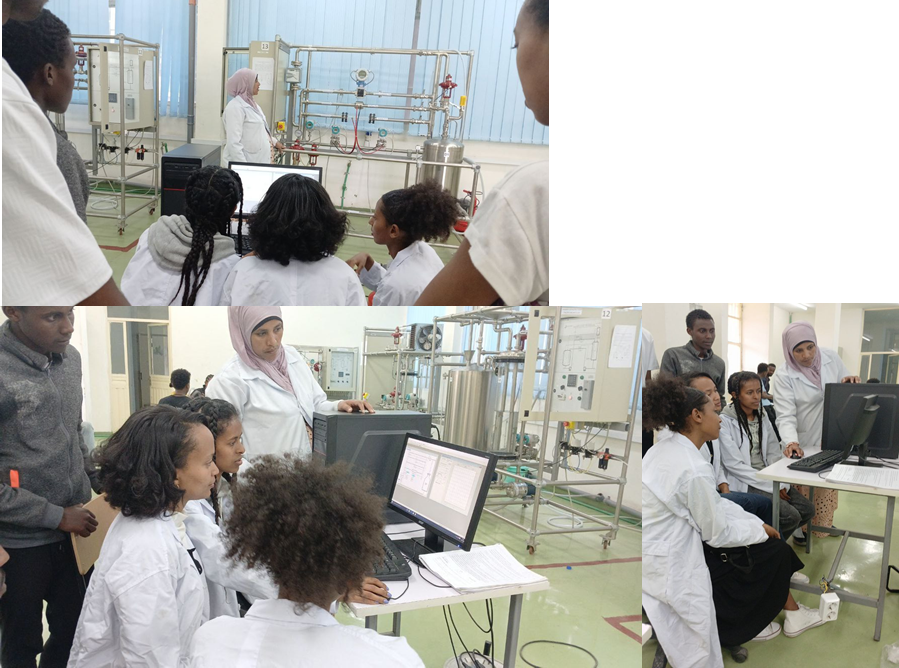
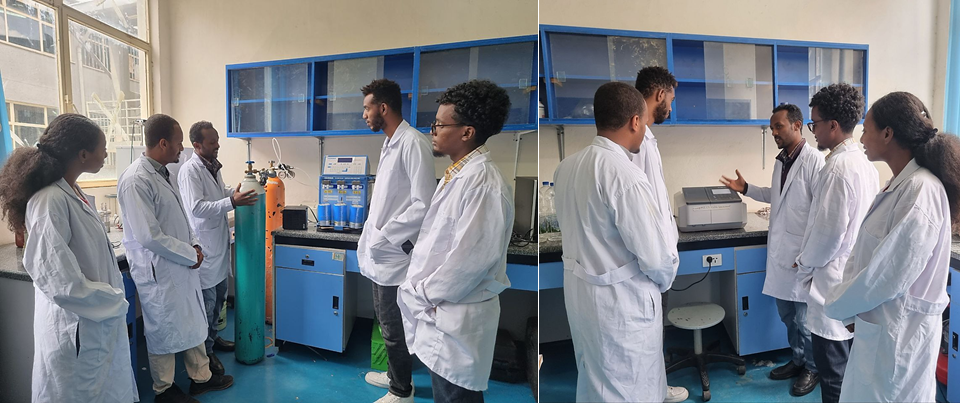
Lab Image

Motto

Transforming Matter, Empowering Progress

PHILOSOPHY

  • Teaching core principles of chemistry, physics, mathematics, and engineering that serve as the building blocks of chemical engineering.
  • Fostering hands-on learning through laboratory work, design projects, and internships to ensure students are well-equipped for real-world problems.
  • Developing eco-friendly processes for energy production, waste treatment, and resource conservation.
  • Exploring new materials, systems, and processes at the molecular and nanoscale to drive innovation in various industries.
  • Teaching students the importance of ethical decision-making in engineering practice, especially regarding safety, environmental protection, and societal welfare.
  • Preparing students for international careers by promoting cultural awareness and the ability to work in diverse, global teams.
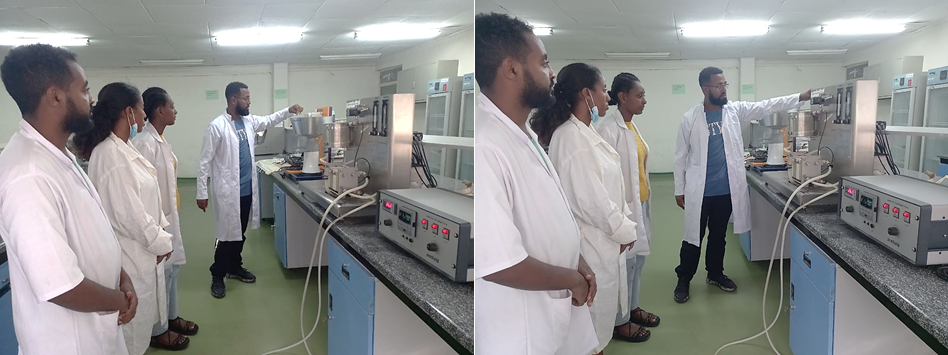
  • Lab Image

    Students and Staff Profile

    There are about 256 students in the Chemical Engineering of AASTU in 2024/2025. Around 454 graduated with a BSc in Chemical Engineering, 60 graduated with an MSC, and 10 graduated with a PhD degree in different specialization stream.

    Lab Image

    STAFF BASED ON THEIR EDUCATION

    Chemical Engineering Staff

    ACADEMIC RANK MALE FEMALE TOTAL
    Associate Professor 5 0 5
    Assistant Professor 8 0 8
    Lecturer 10 3 13
    Total 23 3 26

    Research Assistants Based on Education Level

    ACADEMIC RANK MALE FEMALE TOTAL
    Technical Assistant 0 0 0
    Senior Technical Assistant 2 0 2
    Chief Technical Assistant I 6 4 10
    Chief Technical Assistant II 1 0 1
    Total 9 4 13

    STUDENTS’ PROFILE 2024/2025

    Department Degree Masters PhD Total
    Male Female Total Male Female Total Male Female Total
    Chemical Engineering 166 90 256 8 3 11 22 4 26 293

    PROGRAMS

    A. Undergraduate Programs - BSc

    Department Program
    Chemical Engineering Chemical Engineering

    B. Postgraduate Programs - MSc

    Department Master’s Program Specializations
    Chemical Engineering Chemical Engineering Chemical Process and Product Design
    Bio-energy Engineering
    Food Process Engineering
    Smart Materials Engineering

    PhD Programs

    Department PhD Program Specializations
    Chemical Engineering Chemical Engineering Chemical Process and Product Design
    Bio-energy Engineering
    Food Process Engineering
    Smart Materials Engineering

    Course Breakdown of Chemical Engineering

    Year I, Semester I &II

    Semester I

    Course Code Course Title Cr.hr. Lect. Tut. Lab.
    Phil1009 Logic and Critical Thinking 3 3 0 0
    Psyc1011 General Psychology 3 3 0 0
    FLEn1003 Communicative English Language Skills I 3 2 3 0
    GeEs1005 Geography of Ethiopia and The Horn 3 3 0 0
    Math1007 Mathematics for Natural Science 3 2 3 0
    SpSc1013 Physical Fitness P/F 1 0 3
    Phys1001 General Physics 3 2 3 0
    Total 18 14 9 3

    Semester II

    Course Code Course Title Cr.hr. Lect. Tut. Lab.
    EmTe1108 Emerging Technology for Engineers 3 3 0 0
    Entr1106 Entrepreneurship for Engineers 3 2 3 0
    Anth1002 Social Anthropology 2 2 0 0
    FLEn1004 Communicative English Language Skills-II 3 2 3 0
    Math1014 Applied Mathematics IB 4 3 3 0
    MCiE1012 Moral and Civic Education 2 2 0 0
    Incl1010 Inclusiveness 2 2 0
    Total 19 16 6 0

    Semester I

    Course Code Course Title Cr.hr. Lect. Tut. Lab.
    MEng2101 Engineering Drawing 3 1 0 6
    Comp2003 Introduction to Computer Programming 3 2 0 3
    CEng2103 Engineering Mechanics I (Statics) 3 2 3 0
    Math2007 Applied Mathematics IIB 4 3 3 0
    Econ2009 Economics 3 2 3 0
    GLTr2011 Global Trend 2 2 0 0
    Total 18 13 12 3

    semester II

    Course Code Course Title Cr.hr. Lect. Tut. Lab.
    MEng2002 Engineering Mechanics II Dynamics 3 2 3 0
    Stat2004 Probability and Statistics 3 2 3 0
    ChEg2106 Basic Principles of Process Calculations 3 2 3 0
    InCh2108 Applied Inorganic Chemistry 3 2 3 0
    HiES2002 History of Ethiopia and The Horn 3 3 0 0
    Math2042 Applied Mathematics IIIB 4 3 3 0
    MEng2014 Workshop practice 1 0 0 3
    Total 20 14 15 3

    semester I

    Course Code Course Title Cr.hr. Lect. Tut. Lab.
    ChEg3101 Technical Report Writing 1 1 0 0
    InCh3103 Applied Organic Chemistry 3 2 3 0
    ChEg3105 Numerical Methods in Chemical Engineering 3 2 3
    ChEg3107 Chemical Engineering Thermodynamics I 3 2 3 0
    InCh3109 Fundamentals of Analytical Chemistry 3 2 3
    ChEg3111 Transport Phenomena 3 2 3 0
    ChEg3113 Fluid Mechanics 3 2 3 0
    Total 19 13 18

    semester II

    Course Code Course Title Cr.hr. Lect. Tut. Lab.
    ChEg3102 Mechanical Unit Operations 3 2 3 0
    ChEg3104 Reaction Engineering I -Reaction Kinetics 3 2 3 0
    ChEg3106 Thermal Unit Operations 3 2 3 0
    ChEg3108 Material Science and Engineering 3 3 0 0
    ChEg3110 Chemical Engineering Thermodynamics II 3 2 3 0
    ChEg3112 Fluid Machines for Chemical Engineers 3 2 3
    ChEg3114 Mechanical Unit Operations Laboratory 1 0 0 3
    Total 19 13 15 3

    semester I

    Course Code Course Title Cr.hr. Lect. Tut. Lab.
    ChEg4101 Reaction Engineering II-Reactor Design 3 2 3 0
    ChEg4103 Reaction Engineering Laboratory 1 0 0 3
    IETP4115 Integrated Engineering Team Project 3 1 0 6
    ChEg4107 Thermal and Mass Transfer Unit Operations Laboratory 2 0 0 4
    EEEg4009 Basic Electrical Circuit and Introduction to Electrical Machine 3 2 0 3
    EnEg4111 Basic Environmental Engineering 3 3 0 0
    ChEg4113 Mass Transfer Unit Operations 4 3 3 0
    Total 19 13 6 13

    semester II

    Course Code Course Title Cr.hr. Lect. Tut. Lab.
    ChEg4102 Process Dynamics and Control 3 2 3 0
    ChEg4104 Process Control Laboratory 1 0 0 3
    ChEg4106 Fundamentals of Biochemical Engineering 3 2 3 0
    ChEg4108 Process Industries 4 3 0 3
    ChEg4110 Chemical Engineering Apparatus Design 4 3 3 0
    MEng4012 Strength of Materials 3 2 3 0
    Total 18 12 12 6

    NB: Three hours (3hr) assigned for lab for the course Process Industries is considered as an industry visit in selected industries.

    Year IV, Summer Semester

    Course Code Course Title Cr.hr. Lect. Tut. Lab.
    ChEg4115 Internship 6 0 0 18
    Total 6 0 0 18

    NB: Eighteen hours assigned for the lab in the course Internship is considered as industry work in the assigned internship place

    semester I

    Course Code Course Title Cr.hr. Lect. Tut. Lab./Pr
    ChEg5103 Computer Aided Process Design and Simulation 3 2 3 0
    ChEg5117 Integrated Plant Design Project 3 3
    ChEg5107 Plant Design and Economics 3 2 3 0
    ChEg5109 Sustainable Resources and Energy Technology 3 3 3 0
    ChEg5111 Research Method and Experimental Design 2 2 0 0
    ChEg5113 Process Integration and optimizations 3 2 3 0
    ChEg5115 Final Year Project-Phase One P/F 0 0 3
    Total 17 11 12 6

    semester II

    Course Code Course Title Cr.hr. Lect. Tut. Lab.
    ChEg5102 Electrochemical Engineering 2 2 0 0
    ChEg5104 Production and Project Management 3 3 0 0
    ChEg5106 Industrial Safety and Loss Management 3 3 0 0
    ChEgxxxx Elective (ChEgxxxx) 3 2 3 0
    ChEg5108 Final Year Project –Phase Two 6 0 0 6
    Total 17 10 3 6

    NB: Elective course will be selected from list of elective courses based on student interest and available staff for teaching.

    No. Course Title Code
    01 Introduction to Food Process Technology ChEg5210
    02 Polymer Science and Engineering ChEg5212
    03 Petroleum Refining Engineering ChEg5214
    04 Fundamentals of Bioprocessing Engineering ChEg5216
    05 Fundamentals of Pharmaceutical Technology ChEg5218
    06 Energy Management and Audit ChEg5220
    07 Fundamentals of Textile Chemical Processing ChEg5222
    08 Fundamentals of Nuclear Engineering ChEg5224

    Program Educational Objectives (PEO)

    The program educational objectives (PEOs) of the B.Sc. degree program in Chemical Engineering at AASTU are broad statements describing what our graduates are expected to attain within a few years after graduation (3 to 5 years) and are based on the needs of our constituencies.

    PEO PEO Statement
    PEO-1 Some of the graduates will exercise managerial positions in industries, government, and non-government organizations to achieve their career goals.
    PEO-2 Some of the graduates will become professional chemical Engineers.
    PEO-3 Some of the graduates will become successful entrepreneurs in chemical engineering.
    PEO-4 Some of the graduates will become researchers and academicians in the field of chemical engineering.

    Program Outcome / Student Outcome (PO/SO)

    PO PO/ SO Statement
    PO-1An ability to apply knowledge of mathematics, natural science, computing and engineering fundamentals, and chemical engineering specialization to solve complex engineering problems.
    PO-2An ability to identify, formulate, and solve complex engineering problems by applying principles of engineering, science, and mathematics.
    PO-3An ability to apply engineering design to produce solutions that meet specified needs with consideration of public health, safety, and welfare, as well as global, cultural, social, environmental, and economic factors.
    PO-4An ability to develop and conduct appropriate experimentation, analyze and interpret data, and use engineering judgment to draw conclusions.
    PO-5An ability to create, select and apply, and recognize limitations of appropriate techniques, resources, and modern engineering and IT tools, including prediction and modeling, to complex engineering problems.
    PO-6An ability to analyze and evaluate the impacts of sustainable development when solving complex engineering problems and design, considering society, the economy, environmental sustainability, health and safety, legal frameworks, and the environment.
    PO-7An ability to recognize ethical and professional responsibilities in engineering situations and make informed judgments, which must consider the impact of engineering solutions in global, economic, environmental, and societal contexts.
    PO-8An ability to function effectively on a team whose members together provide leadership, create a collaborative environment, establish goals, plan tasks, and meet objectives.
    PO-9An ability to communicate effectively with a range of audiences.
    PO-10An ability to apply knowledge and understanding of engineering management principles and economic decision-making and apply these to one’s own work, as a member and leader in a team, and to manage projects and in multidisciplinary environments.
    PO-11An ability to acquire and apply new knowledge as needed, using appropriate learning strategies.
    AASTU Program Outcomes ABT-1 ABT-2 ABT-3 ABT-4 ABT-5 ABT-6 ABT-7
    PO-1 √
    PO-2 √
    PO-3 √
    PO-4 √
    PO-5
    PO-6 √
    PO-7 √
    PO-8 √
    PO-9 √
    PO-10
    PO-11 √

    Admission Requirements

    Admission to the undergraduate program of AASTU is based on the completion of the Ethiopian School Leaving Certificate Examination (ESLCE) result and obtaining the necessary pass marks set by the Ministry of Education or equivalent academic achievement from foreign countries (AASTU Senate Legislation 2017; Articles 77 and 78).

    The university announces a call for interested students who fulfill the university's additional cutting point set by Admissions and Enrollment Committee (AEC) as per AASTU Senate Legislation 2017; Articles 19/3 for applying to take the entrance exam (VPAA/APD/SOP/002) set jointly by AASTU and Adama Science and Technology University (ASTU).

    Before the students are admitted to specific programs, they take a one-year national requirement freshman common courses and one more semester of pre-engineering courses. Then, the student is admitted to the B.Sc. Degree in Chemical Engineering program on a competitive basis using their grade (three-semester CGPA) as a measure according to AASTU Senate Legislation Article 80 and standard operating procedure for undergraduate student placement administration (VPAA/APD/SOP/003).

    However, special provisions have been made for female students and other socially disadvantaged groups requiring affirmative action per AASTU Senate Legislation 2017; Articles 80/1 and the placement guideline (VPAA/APD/SOP/003). The university registrar's office and the placement committee are responsible for all operation matters related to student admission to the B.Sc. Degree in Chemical Engineering program.

    An applicant who believes that there was an error in the placement may report the case to the academic unit and University Registrar for review (AASTU Senate Legislation 2017; Articles 80/10). The registrar's office and placement committee investigate the claim made by the students and announce the final decision according to the findings before the start of the respective semester class.

    Duration of Study

    The duration of the Chemical Engineering undergraduate program is five academic years (ten semesters). The continuing education program will have a duration of six academic years (twelve semesters).

    Graduation Requirements

    The graduation requirement for the program is based on the university’s senate legislation (July 2017) of Article 109. To graduate with a Bachelor of Science in Chemical Engineering, a student needs to satisfy the following minimum requirements:

    • Must complete a minimum of 190 Cr.Hr.
    • Obtain a cumulative grade point average (CGPA) of at least 2.00.
    • Achieve no "F" grade in any course taken for the undergraduate program.
    • Attain a pass mark for all courses that have a Pass/Fail grade.
    • Pass the National Exit Exam of the program.
    Chemical Engineering Laboratories - AASTU

    Chemical Engineering Department - Laboratories

    SN Laboratory Name Location Responsible academic research assistant (ARA) Contact address of ARA Laboratory Head
    1 Thermal Unit Operation Lab B-60, R-201 Aleme Dessalegn aleme.desalegn@aastu.edu Dr. Girma Gonfa
    2 Process Control lab B-60, R-101 Momina Seleman momina.seleman@aastu.edu.et Dr. Ali Shemsedin
    3 Reaction Engineering Lab B-60, R-103 Egigayehu Chakiso ejigayehu.chakiso@aastu.edu.et Dr. Belachew Zegale
    4 Mass transfer Unit Operation Lab B-60, R-001, B-60, R-002 Melat Bereket melat.bereket@aastu.edu.et Dr. Sintayehu Mekuria
    5 Mechanical Unit Operation B-60, R-202 Asegid Tebeje asegid.tebeje@aastu.edu.et Dr. Yalew W/Amanuel
    6 Fluid machine Lab B-60, R-203
    7 Postgraduate Research Laboratory B-60, R-303 Dejene Tilahun dejene.tilahun@aastu.edu.et Dr. Belachew Zegale
    8 Undergraduate Research Laboratory B-60, R-102 Dejene Tilahun dejene.tilahun@aastu.edu.et Dr. Adamu Esubalew
    9 Fruit and Vegetables Lab B-60, R-301 Ibrahim Ahmed ibrahim.ahmed@aastu.edu.et Dr. Habtamu Admassu
    10 Beverage Lab
    11 Meat and Dairy Processing Lab B-60, R-401 Ibrahim Ahmed ibrahim.ahmed@aastu.edu.et
    12 Packaging Lab B-60, R-403 Merido Getachew marido.getachew@aastu.edu.et Dr. Habtamu Admassu
    13 Food Analysis Lab Merido Getachew marido.getachew@aastu.edu.et
    14 Product development & sensory lab Merido Getachew marido.getachew@aastu.edu.et
    15 Cereal and Grain Processing Lab B-77, ground floor Tagesse Lambebo tagessel3@gmail.com Dr. Habtamu Admassu
    16 Oil Processing Lab Tagesse Lambebo tagessel3@gmail.com
    17 Food Research Lab B-77, 1st floor Shiferaw Ayalneh/ Hiwet Meresa shiferaw.ayalneh@aastu.edu.et/ hiwet.meresa@aastu.edu.et Dr. Henock W/Michael
    18 Food Engineering Unit Operations Lab
    19 UG Project Computer Lab B-73, R-407 Endeshaw Bayile endeshaw.baylie@aastu.edu.et Mr. Assefa Alene
    20 PG Project Computer Lab B-73, R-408
    21 PG Project Computer Lab B-73, R-409
    Mechanical Unit Operation Laboratory

    The Mechanical Unit Operation Laboratory covers various aspects related to chemical engineering processes such as granulometry and mesh analysis, size reduction of solid particles, fluidization, sedimentation, filtration, mixing and others.

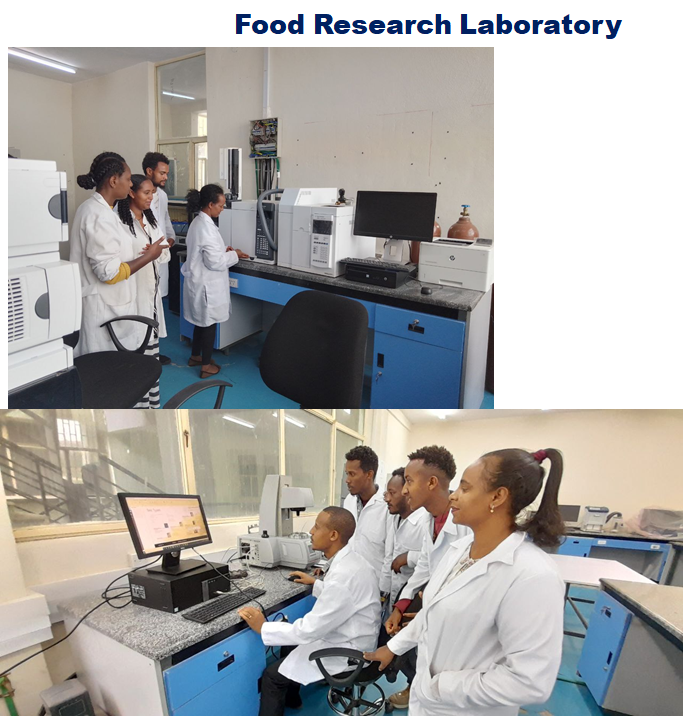
    The Food Research Laboratory Is intended to perform various qualitatively and quantitatively analysis of different samples, such as Fatty acid composition, essential Oils, functional group of different materials using FTIR, content of Caffeine using HPLC, Vitamins Using HPLC, Crude Fat content, viscoelastic properties using Rheometer, Differential Scanning Calorimetry (DSC), water activity testing.

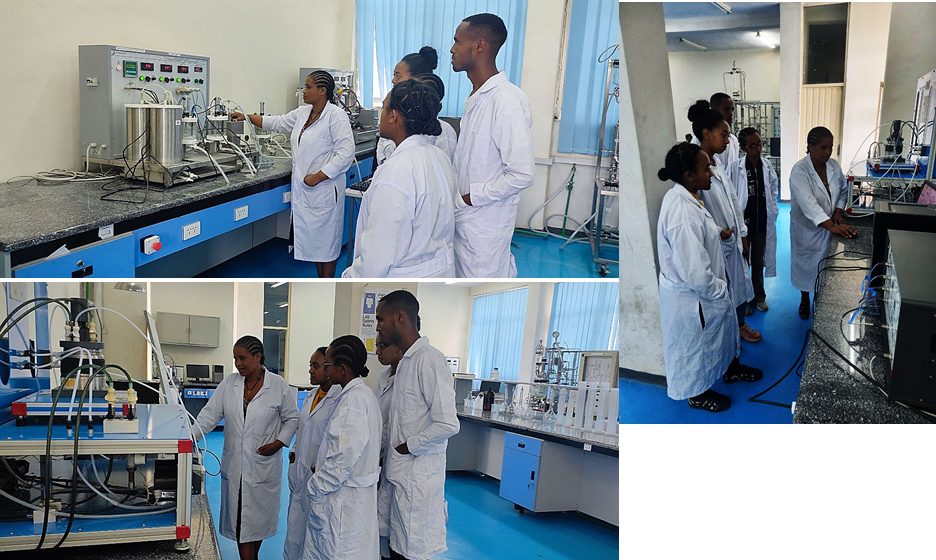
    The Reaction Engineering Laboratory is intended to perform various laboratory activities such as reaction kinetics of catalytic reactions, analysis of kinetics of non-catalytic reactions, analysis of characteristic parameters of batch reactor, continuous stirred tank reactor, plug flow reactor and cascade reactors

    The purpose of the Process Control Laboratory is to conduct experiments using temperature, pressure, and level control trainers. This includes studying various controllers such as proportional, proportional integral, proportional derivative, and proportional integral derivative controllers. Additionally, the laboratory focuses on controller tuning methods, including open loop and closed loop techniques.

    The Thermal Unit Operation Laboratory aims to investigate heat transfer processes in tube-in-tube, shell-and-tube, and plate and frame heat exchangers by manipulating flow patterns in concurrent and countercurrent flows. The laboratory also focuses on determining fouling factors in these heat exchangers.

    The objective of Postgraduate Research Laboratory is to provide a dedicated space and resources for postgraduate students to conduct their research projects. This laboratory typically offers research equipment and facilities tailored to the specific research needs of postgraduate students, allowing them to carry out experiments, analyze data, and develop their research skills in a supportive environment.

    The objective of Mass Transfer Unit Operation Laboratory is to provide students with hands-on experience and practical understanding of the principles and processes related to mass transfer equipment such as distillation, absorption, extraction, gas diffusion and crystallization. It helps to enhance students’ understanding of mass transfer phenomena and their ability to apply this knowledge in industrial and research settings.
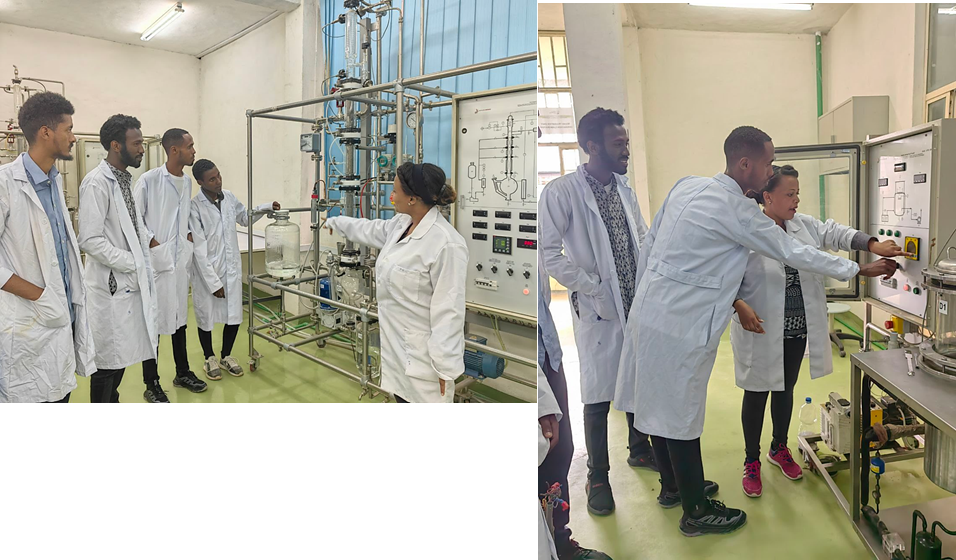
    The objective of Cereal (Grain) Processing Technology Laboratory is to provide students with a comprehensive understanding of the principles, techniques, and processes involved in the processing of cereal grains such as tempering, wet milling of cereal grain, yellow pigment level estimation in durum wheat grain/flour, determination of flour and dough quality, milling of pulses and determination of dehulling efficiency and soymilk and tofu processing.
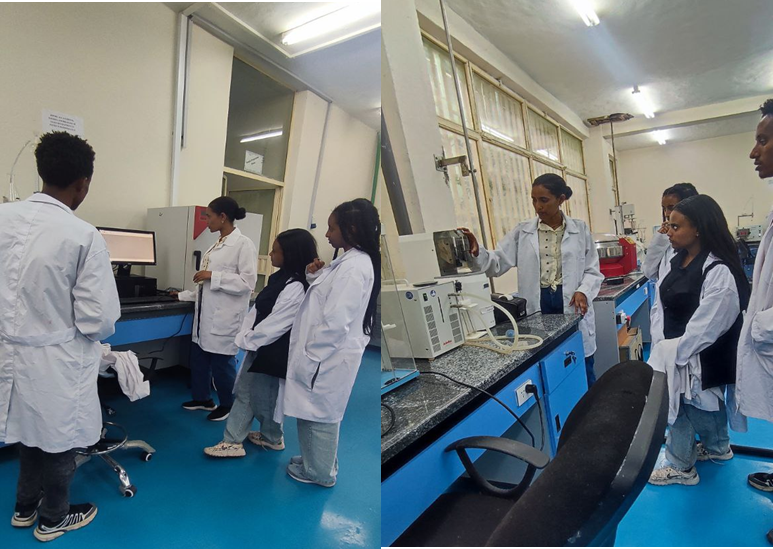
    The objective of Dairy Processing Laboratory is to understand the working principle of different type of diary processing equipment’s and perform researches focusing on diary processing technologies.

    Chemical Engineering Faculty Profiles - AASTU

    Chemical Engineering Department - Faculty Profile

    S/N Picture Name Sex Academic Rank Specialization Contact address (Email address)
    1 Dr. Sintayehu Mekuria Hailegiyorgis M Associate Professor Chemical Engineering Email: sintayehu.mekuria@aastu.edu.et
    Phone No.: +251909779416
    2 Dr. Girma Gonfa M Associate Professor Chemical Engineering Email: girma.gonfa@aastu.edu.et
    Phone No.: +251911311232
    3 Dr. Belachew Zegale Tizazu M Associate Professor Chemical Engineering Email: belachew.zegale@aastu.edu.et
    Phone No.: +251968596642
    4 Dr. Ali Shemsedin M Associate Professor Chemical Engineering Email: ali.shemsedin@aastu.edu.et
    Phone No.: +251913246906
    5 Dr. Habtamu Admassu Tessema M Associate Professor Food Science and Technology Email: habtamu.admasu@aastu.edu.et
    Phone No.: +251-911105992
    6 Dr. Henock Woldemichael Woldemariam M Assistant Professor Food Engineering Email: henock.woldemichael@aastu.edu.et
    Phone No.: +251912038334
    7 Dr. Yalew Woldeamanuel Sitotaw M Assistant Professor Chemical Engineering, Polymer Engineering Email: yalew.woldeamanuel@aastu.edu.et
    Phone No.: +251-934471290
    8 Dr. Adamu Esubalew Kassa M Assistant Professor Chemical Engineering (Chemical Process and Product Design) Email: adamu.esubalew@aastu.edu.et
    Phone No.: +251913903654
    9 Dr. Aman Kassaye Sibhatu M Assistant Professor Chemical Engineering, Process Engineering Email: aman.kasye@aastu.edu.et
    Phone No.: +251-923490737
    10 Dr. Demelash Tilahun Bekele M Assistant Professor Chemical Engineering (Chemical Process and Product Design) Email: demelash.tilahun@aastu.edu.et
    Phone No.: +251910309035
    11 Dr. Ibsa Neme Mogose M Assistant Professor Chemical Engineering (Chemical Process and Product Design) Email: ibsa.neme@aastu.edu.et
    Phone No.: +251910174515
    12 Dr. Kibebe Sahele Hailegebriel M Assistant Professor Chemical Engineering (Smart Materials Engineering) Email: kibebe.sahaile@aastu.edu.et
    Phone No.: +251-900407727
    13 Dr. Wondimu Musie Geleta M Assistant Professor Chemical Engineering (Chemical Process and Product Design) Email: wondimu.mussie@aastu.edu.et
    Phone No.: +251911016318
    14 Assefa Alene M Lecturer Chemical Engineering (Process Engineering) Email: assefa.alene@aastu.edu.et
    Phone No.: +251954895600
    15 Muhidin Seid M Lecturer Chemical Engineering Email: muhdin.seid@aastu.edu.et
    Phone No.: +251911700320
    16 Woinshet Ferede Mihirtu F Lecturer Chemical Engineering (Process Engineering) Email: woinshet.ferede@aastu.edu.et
    Phone No.: +251913363906
    17 Yosef Asrat Waji M Lecturer Environmental Engineering Email: Yosef.asrat@aastu.edu.et
    Phone No.: +251913642255
    18 Ousman Rahmeto Dibaba M Lecturer Biochemical Engineering Email: ousman.rahmeto@aastu.edu.et
    Phone No.: +251911772478
    19 Amsalu Gosu Adgo M Lecturer Biochemical Engineering Email: amsalu.gosu@aastu.edu.et
    Phone No.: +251912812115
    20 Areda Batu Gemechu M Lecturer Textile Technology Email: areda.batu@aastu.edu.et
    Phone No.: +251911387173
    21 Abel Woldu Ourgessa M Lecturer Chemical Engineering Email: abel.woldu@aastu.edu.et
    Phone No.: +251963263169
    22 Baru Debtara M Lecturer Chemical Engineering Email: baru.debtera@aastu.edu.et
    Phone No.: +251961232604
    23 Biruk Alemu Bekele M Lecturer Chemical Engineering Email: biruk.alemu@aastu.edu.et
    Phone No.: +32 487 45 58 27
    24 Feyera Gobena Gemechu M Lecturer Food Technology Email: feyera.gobena@aastu.edu.et
    Phone No.: +25192 324 8783
    25 Fikiya Mohamed Endris F Lecturer Post Harvest Management Email: fekiya.mohammed@aastu.edu.et
    Phone No.: +251912072036
    26 Gashaw Assefa Yehuala M Lecturer Food Engineering Email: gashaw.assefa@aastu.edu.et
    Phone No.: 251913966425
    27 Girma Biratu Dori M Lecturer Food Engineering Email: girma.biratu@aastu.edu.et
    Phone No.: +251911823044
    28 Gizachew Assefa Kerga M Lecturer Chemical Engineering (Environmental Engineering), Membrane Engineering Email: Gizachew.asssefa@aastu.edu.et
    Phone No.: +251911823044
    29 Haimnote Tebebe Belachew F Lecturer Chemical Engineering (Process Engineering) Email: haimnote.tebebe@aastu.edu.et
    Phone No.: +251 913 826464
    30 Maroda Tsefaye Gari F Lecturer Chemical Engineering (Process Engineering) Email: meroda.tesfaye@aastu.edu.et
    Phone No.: +251913518057
    31 Nahom Daniel Sahlemariam M Lecturer Textile Technology Email: nahom.daniel@aastu.edu.et
    Phone No.: +251911830779
    32 Sintayehu Shewatatek Hailu F Lecturer Chemical Engineering (Process Engineering) Email: sintayehu.shewatatek@aastu.edu.et
    Phone No.: +251961008112
    33 Tsegazeab Gebregiziyabiher Gared M Lecturer Textile Technology Email: tsegazeab.gebreegziabher@aastu.edu.et
    Phone No.: +251912106034
    34 Tuamelsan Shumye Gebrie M Lecturer Food Engineering Email: tuamelsan.shumye@aastu.edu.et
    Phone No.: +251925158864
    35 Wondesen Workneh Ejersa M Lecturer Chemical Engineering (Process Engineering) Email: wondesen.workneh@aastu.edu.et
    Phone No.: +251913175077
    36 Zhara Nuru Mohammed F Lecturer Food Science and Nutrition Email: zahara.nuru@aastu.edu.et
    Phone No.: +251911970331
    37 Aleme Dessalegn Gebremichael F Chief Academic Research Assistant -I Chemical Engineering (Process Engineering) Email: aleme.desalegn@aastu.edu.et
    Phone No.: +251913345159
    38 Aseged Tebeje Tasew M Chief Academic Research Assistant -I Chemical engineering (Environmental Engineering) Email: aseged.tebeje@aastu.edu.et
    Phone No.: +251-913343590
    39 Ejigayehu chakiso Gebremariyam F Chief Academic Research Assistant -I Chemical Engineering (Chemical Process and Product Design) Email: Ejigayeh.chakiso@aastu.edu.et
    Phone No.: +251912489526
    40 Hiwot Mersa GebreMeskel F Chief Academic Research Assistant -I Chemistry Email: hiwet.meresa@aastu.edu.et
    Phone No.: +251-914518324
    41 Ibrahim Ahmed Sherif M Chief Academic Research Assistant -I Food Science And Nutrition Email: ibrahim.ahmed@aastu.edu.et
    Phone No.: +251913643758
    42 Marido Getachew Tafa M Chief Academic Research Assistant -I Chemical Engineering (Food Process Engineering) Email: marido.getachew@aastu.edu.et
    Phone No.: +251925478086
    43 Momina Seleman Maruf F Chief Academic Research Assistant -I Environmental Engineering Email: Momina.seleman@aastu.edu.et
    Phone No.: +251-911316133
    44 Shiferaw Ayalneh Worku M Chief Academic Research Assistant -I Chemical Engineering (Food Process Engineering) Email: shiferaw.ayalneh@aastu.edu.et
    Phone No.: +251-923042926
    45 Tagesse Lambebo Minkeso M Chief Academic Research Assistant -I Food Science and Nutrition Email: tagessel3@gmail.com
    Phone No.: +251 93 036 8823
    46 Frehiwot W/yohans G/mariyam F Chief Academic Research Assistant -I Food Science and Nutrition Email: feriehiwot.wyohanis@aastu.edu.et
    Phone No.: +251923751533
    47 Desalegn Abit Ayele M Chief Academic Research Assistant -II Biochemical Engineering Email: desalegn.abit@aastu.edu.et
    Phone No.: +251911683135
    48 Dejene Tilahun T/mariyam M Senior Academic Research Assistant Applied Chemistry (Analytical Chemistry) Email: dejene.tilahun@aastu.edu.et
    Phone No.: +251931180913
    49 Melat Bereket Sherif F Senior Academic Research Assistant Chemical Engineering (Food Process Engineering) Email: melat.bereket@aastu.edu.et
    Phone No.: +251920241219
    50 Mulugeta Muhe Mekonnen M Senior Academic Research Assistant Chemical Engineering Email: mulugeta.muhe@aastu
    Phone No.: +251912687856
    51 Endeshaw Bayile M Academic Research Assistant Computer Science Email: endeshaw.baylie@aastu.edu.et
    Phone No.: +251920768061